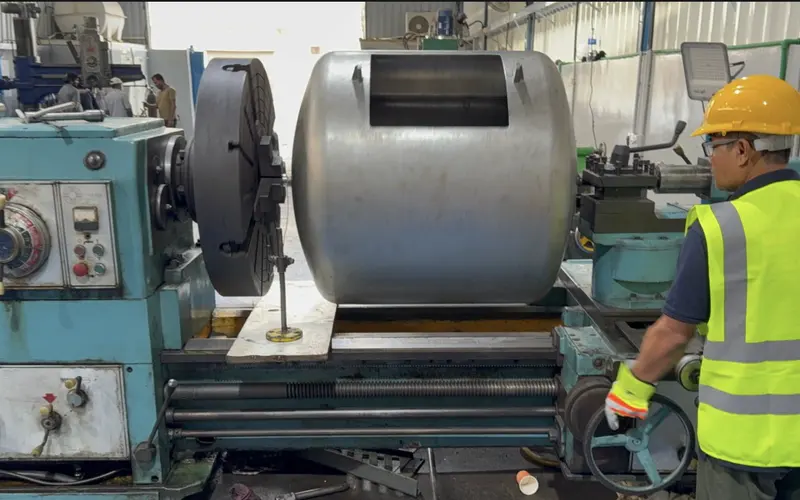
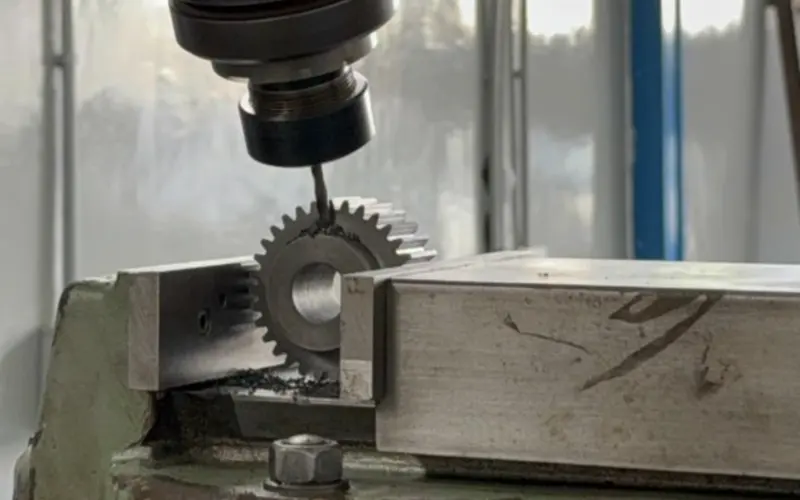
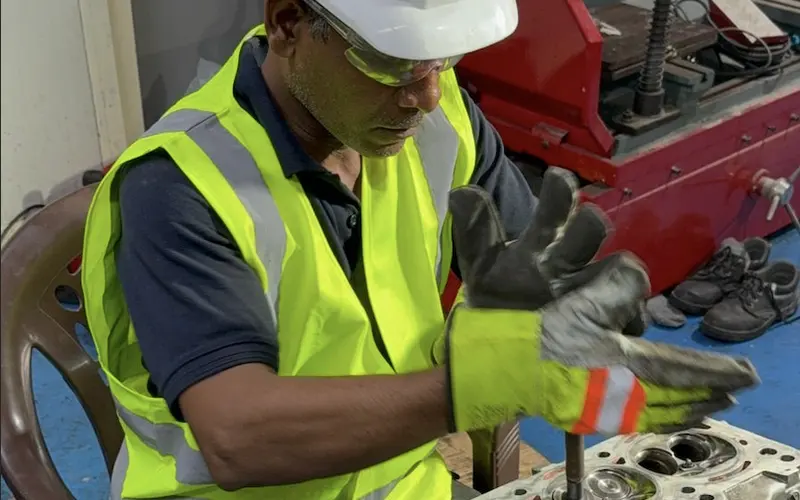
Some parts are best made by casting rather than cutting from solid metal. Complex shapes, large components and wear parts in bronze or cast iron are often more economical — and perform better — when they start life as a casting and are then machined to their final size.
Global Prime Engineering offers moulding work in cast iron (CI), bronze and brass for custom industrial components, with all finish machining done in our own machine shop in Sharjah Industrial Area 2. It is a practical route to replacement parts that are no longer available from the original manufacturer.
What is moulding work?
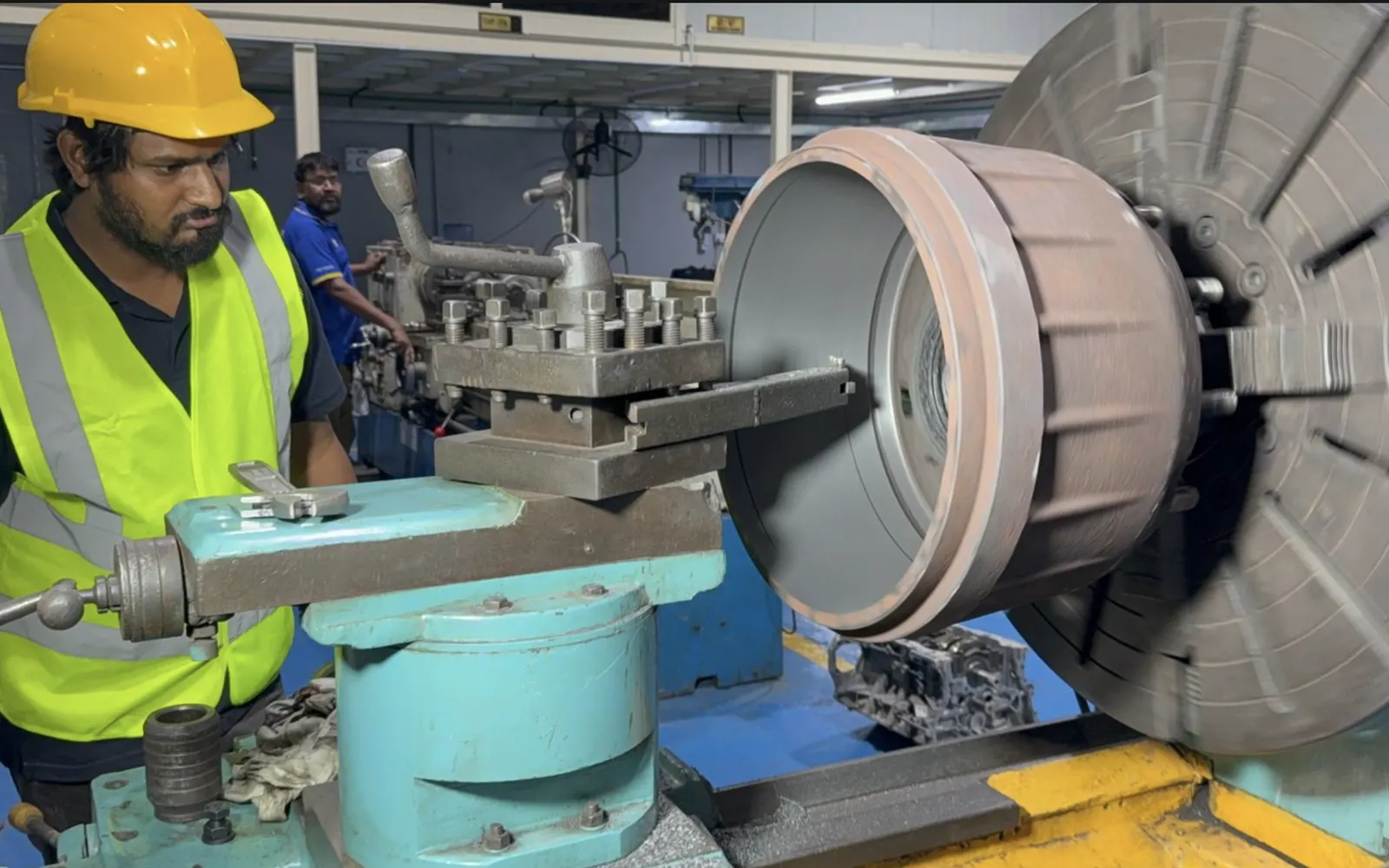
In moulding, molten metal is poured into a mould shaped like the part. Once the metal has solidified, the rough casting is removed, cleaned and machined — turning bores, facing surfaces, cutting threads and keyways — so that it fits and works like the original.
The mould is made from a pattern, which can be produced from a drawing or copied from an existing part.
Choosing the right metal
- Cast iron (CI): excellent machinability, vibration damping and wear resistance. Used for pulleys, flywheels, housings, machine parts and gear blanks.
- Bronze: strong, corrosion resistant and a natural bearing material. The first choice for bushes, bearings, worm wheels, valve parts and marine components.
- Brass: corrosion resistant and easy to machine. Used for fittings, valve components and electrical parts.
Components we commonly produce
- Bronze bushes, sleeves and plain bearings
- Gear blanks and worm wheel blanks
- Cast iron pulleys, flywheels and housings
- Pump and valve components
- Marine fittings and bushes
- Replacement parts for older or discontinued machinery
From sample to finished part
- 1
Assess the part
Share a drawing, the broken original or a sample. We confirm the material, critical dimensions and machining allowances.
- 2
Pattern and moulding
A pattern is prepared, and the part is moulded and cast in the selected metal.
- 3
Cleaning and inspection
The casting is cleaned up and checked for defects.
- 4
Machining to size
Bores, faces, threads, keyways and gear teeth are machined in-house on our lathes and our milling, hobbing and grinding machines.
- 5
Final check and handover
Critical dimensions are checked before the part is handed over.
Casting or machining from solid?
For small, simple round parts, machining from solid bar is often quicker. Casting becomes attractive for larger diameters, complex or hollow shapes, and when bronze or cast iron bar in the required size is not readily available — it saves material and machining time.
We recommend the most economical route for your part, and if casting is not the right answer we machine it from solid instead — see our CNC machining guide.
Frequently asked questions
Which metals do you work with for moulding?
Cast iron (CI), bronze and brass.
Can you copy a broken part?
Yes. We can work from a broken original or a sample, taking measurements and allowing for wear before the part is moulded and machined.
Are castings machined after moulding?
Yes. Castings are machined to their final dimensions in our own workshop, including bores, faces, threads, keyways and gear teeth.
Why is bronze used for bushes and bearings?
Bronze combines strength with good wear resistance and low friction against steel, and it resists corrosion. That is why it is widely used for bushes, bearings and marine parts.
Is moulding suitable for a single replacement part?
Often, yes — moulding is a common way to replace a part that is no longer available. Send us a drawing or the sample and we will advise whether casting or machining from solid is the better route.