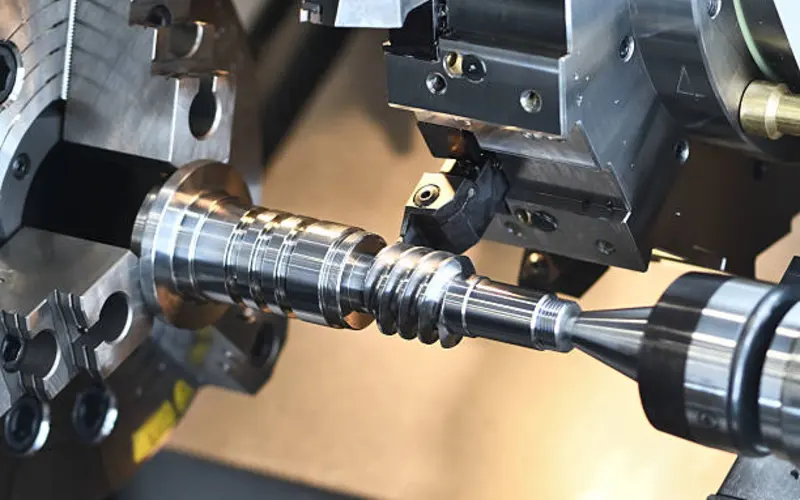
A well-executed engine rebuild can give a tired engine a second working life for a fraction of the cost of a new unit — but only if the machining is right. Bores must be round and straight, decks flat, bearing housings aligned and cylinder heads free of cracks before any new parts go in.
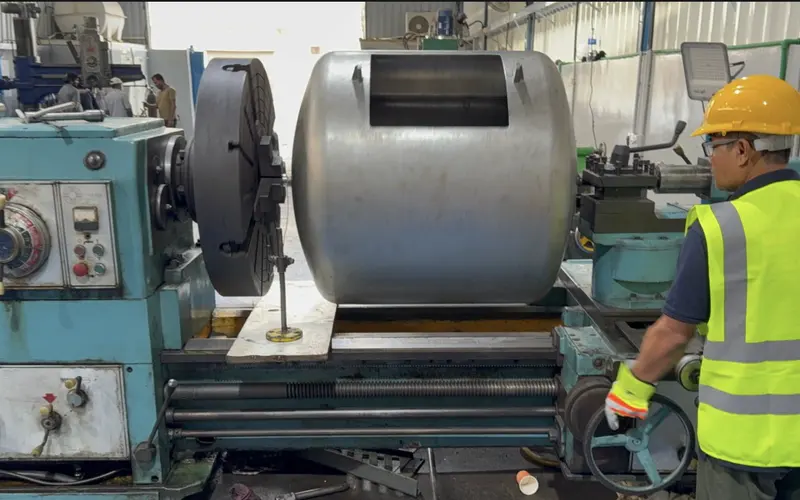
Global Prime Engineering’s workshop in Sharjah Industrial Area 2 is equipped with dedicated engine machine-shop equipment: cylinder block boring, honing, line boring and facing machines, cylinder head facing and valve seat cutting, head pressure testing, crankshaft grinding and connecting-rod bush boring. Here is what each step involves, and how to tell when your engine needs it.
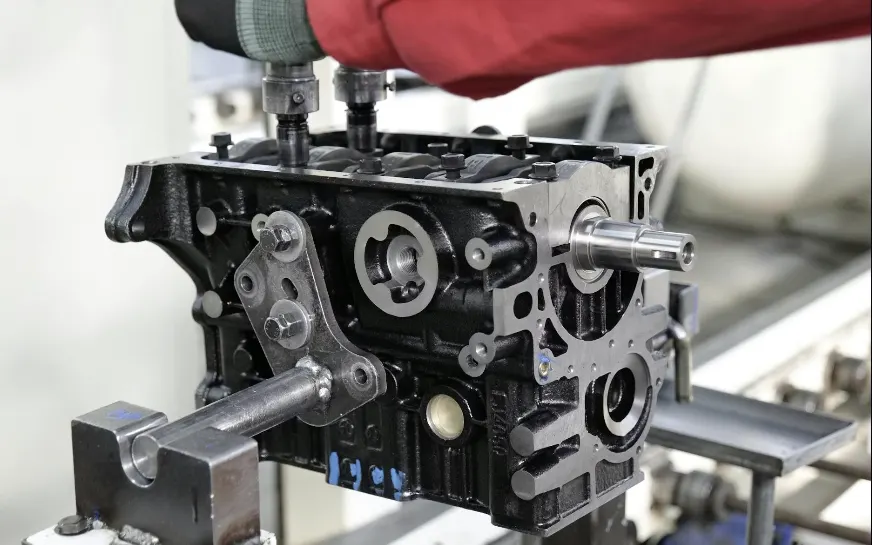
Signs your engine needs a rebuild
- Blue exhaust smoke and rising oil consumption
- Low or uneven compression between cylinders
- Knocking or rumbling from the bottom end
- Overheating, coolant loss or white smoke — often a warped head or failed head gasket
- Low oil pressure and metal particles in the oil
- Loss of power and hard starting that a service or tune-up does not fix
Engine machining services in our Sharjah workshop
- Cylinder block boring: worn or scored cylinders are bored oversize to suit new oversize pistons, restoring roundness and straightness.
- Cylinder honing: after boring, honing brings each bore to its final size and produces the cross-hatch finish that holds oil and lets new piston rings seal.
- Line boring: the main bearing housings are re-machined in line so that the crankshaft runs true.
- Block facing (decking): the top deck is machined flat for a reliable head-gasket seal.
- Cylinder head facing: heads warped by overheating are skimmed flat.
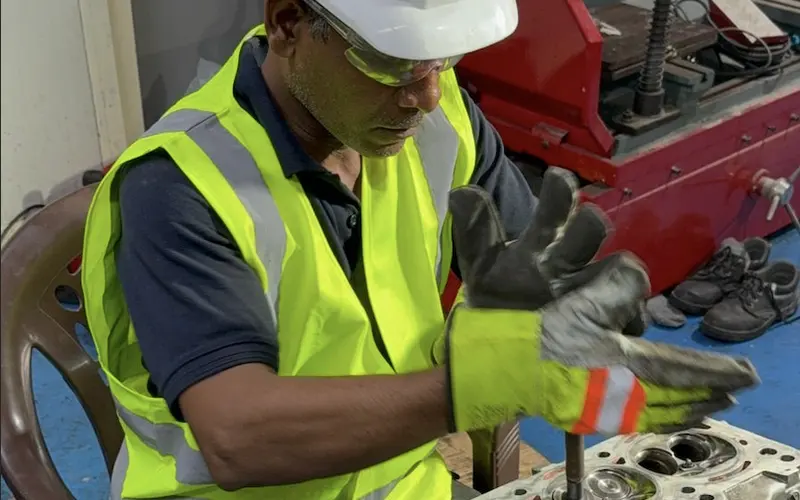
- Valve seat cutting: seats are re-cut so that the valves seal properly and compression is restored.
- Cylinder head pressure testing: heads are pressure-tested to find cracks and leaks before reassembly.
- Crankshaft grinding and balancing: journals are reground and the crankshaft balanced — see our crankshaft grinding guide.
- Connecting-rod bush boring: small-end bushes are bored to fit the piston pins precisely.
Boring, honing or sleeving: what’s the difference?
Boring removes metal to make a worn cylinder round and straight again at a slightly larger (oversize) diameter. Honing is the finishing step: a fine abrasive process that brings the bore to its final size and creates the cross-hatch pattern that piston rings need to bed in.
When a cylinder is too worn or damaged to bore any further, it may need sleeving — fitting a new liner that is then bored and honed to size. We advise on the right option once the bores have been measured.
How we approach an engine rebuild
- 1
Strip-down and cleaning
The engine is dismantled and the components cleaned so that wear and damage can be seen clearly.
- 2
Inspection and measurement
Bores, crankshaft, bearing housings, cylinder heads and connecting rods are measured and checked against specification.
- 3
Quotation and approval
You receive a clear scope of the machining and parts required, and nothing proceeds until you approve it.
- 4
Machining
Boring, honing, facing, grinding and seat cutting are carried out in-house as required.
- 5
Reassembly or handover
We can complete the overhaul, or hand the machined components back to your own mechanics for assembly.
Engines we rebuild
We work on petrol and diesel engines from passenger cars and 4x4s, trucks and buses, construction equipment, generators, compressors and marine applications — for private owners, garages, fleet operators and plant maintenance teams across Sharjah, Dubai and Ajman.
Rebuild or replace?
A rebuild usually makes sense when the block and crankshaft are serviceable, parts are available, and the engine is matched to the vehicle or machine. Replacement can be the better choice when the block is cracked beyond repair, or when parts would cost close to the price of an exchange engine.
Our job is to give you the facts after inspection, so that you can make the decision with confidence.
Frequently asked questions
How long does an engine rebuild take?
It depends on the engine, the scope of machining and the availability of parts. Machining-only jobs are usually quicker than complete overhauls. We give you a timeline with the quotation.
Can you machine just my block or cylinder head?
Yes. Many garages and mechanics bring us blocks, heads, crankshafts and connecting rods for machining only, then assemble the engine themselves.
What does cylinder head pressure testing check?
Pressure testing seals the head’s coolant passages and pressurises them to reveal cracks or porosity that would otherwise cause coolant leaks, overheating or a repeat head-gasket failure.
Do you rebuild heavy diesel and generator engines?
Yes. We work on diesel engines from trucks, buses, construction equipment, generators and marine applications, as well as car and pickup engines.
Is rebuilding cheaper than buying a new engine?
Often, yes — especially for heavy-duty and industrial engines. The answer depends on the damage found and the cost of parts, which is why we inspect and measure before quoting.