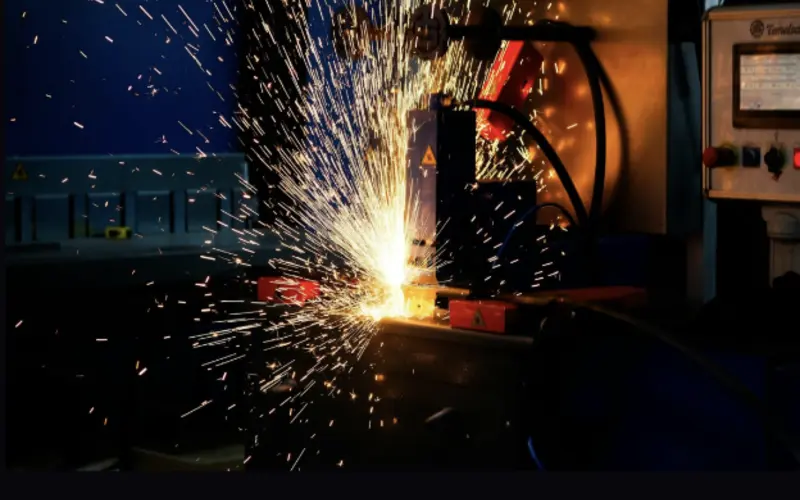
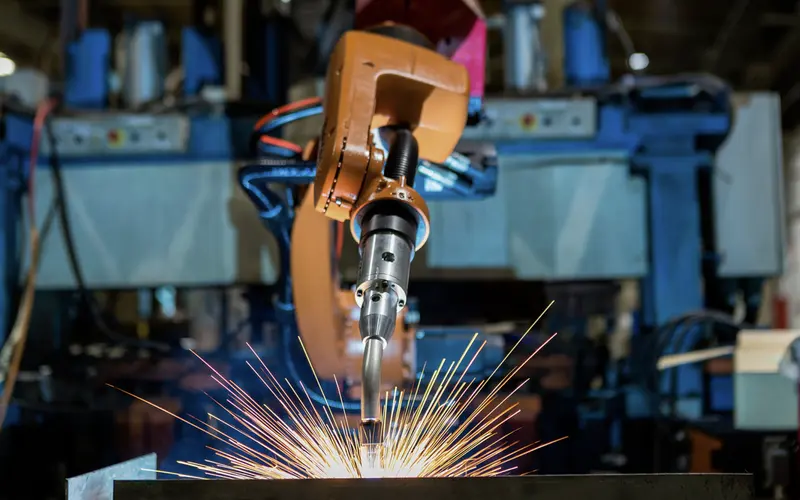
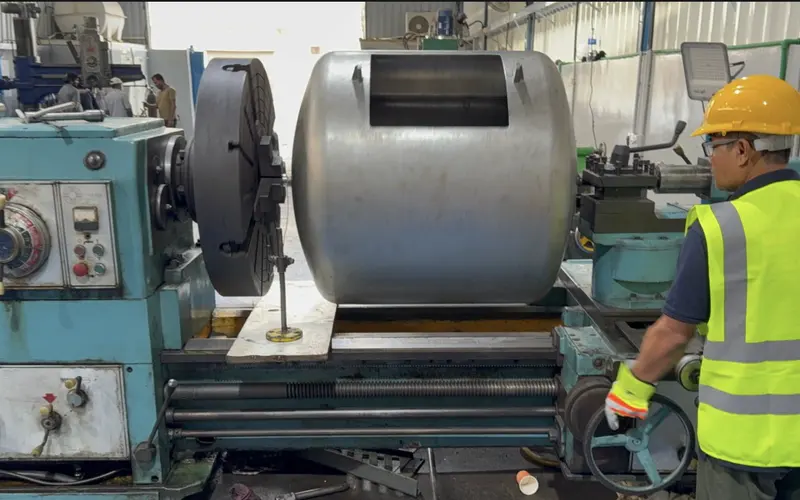
Whether you need a batch of brackets, decorative screens, gaskets or heavy base plates, the cutting process you choose affects the price, the edge quality and the lead time of the job. At our workshop in Sharjah Industrial Area 2 we run both a CNC laser cutting machine and a waterjet machine — plus press brake bending and plate rolling — so we can recommend the process that suits your part.
Here is how laser and waterjet cutting compare, what files we need, and how to get parts cut and formed in Sharjah for projects across Dubai and the UAE.
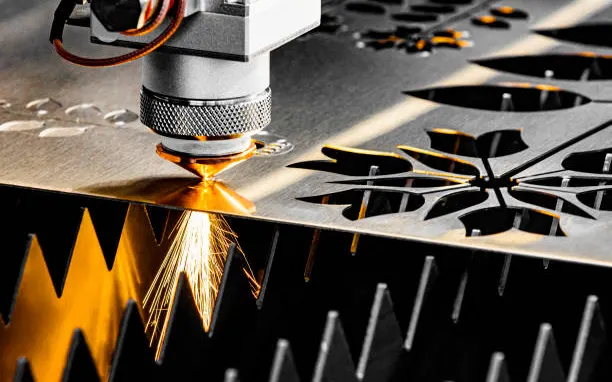
CNC laser cutting: fast, precise and clean
A CNC laser focuses a high-energy beam that melts and cuts metal along a programmed path. It is the go-to process for sheet metal and thinner plate in mild steel, stainless steel and aluminium, where speed, accuracy and clean edges matter.
- Brackets, panels, enclosures and machine guards
- Decorative screens, signage and architectural panels
- Flanges, gussets, base plates and parts for fabrication
- Repeat production parts, cut identically every time
Waterjet cutting: cold cutting for thick and sensitive materials
A waterjet cuts with an ultra-high-pressure stream of water mixed with fine abrasive. Because it is a cold process, there is no heat-affected zone: the material at the cut edge keeps its original properties and there is no heat distortion. Waterjet also cuts many materials that a laser cannot handle well:
- Thick steel and stainless steel plate
- Brass, copper and other reflective metals
- Heat-sensitive alloys and hardened materials
- Rubber, gaskets, plastics and composites
- Stone, glass and ceramic
Laser vs waterjet at a glance
| CNC laser cutting | Waterjet cutting | |
|---|---|---|
| Best for | Sheet metal and thinner plate | Thick plate and non-metals |
| Heat-affected zone | Small | None (cold cutting) |
| Materials | Mild steel, stainless steel, aluminium | Almost any material, including brass, copper, rubber, stone and glass |
| Speed on thin sheet | Very fast | Slower |
| Typical parts | Brackets, panels, screens, enclosures | Base plates, gaskets, thick flanges, special materials |
As a rule of thumb, laser is usually the most economical choice for thin sheet in volume, while waterjet earns its place on thick plate, special materials and parts that must not be affected by heat.
Bending, rolling and forming after cutting
Most cut parts need forming. Our press brake bends sheet and plate into brackets, channels, trays and enclosures, and our plate rolling machine rolls sheet into cylinders and cones. A part can go from flat profile to finished, formed component in one workshop — and on to welding and assembly. See our steel fabrication guide for larger fabricated work.
What to send for a quick quote
- A DXF or DWG file (preferred), or a PDF drawing with dimensions
- The material type and thickness
- The quantity
- Any bending, rolling or finishing requirements
- Your required completion date
No CAD file? Send a sketch, a photo with measurements or a sample part, and our team can help prepare the drawing.
Frequently asked questions
What file formats do you accept for laser cutting?
DXF and DWG files are ideal. We can also work from PDF drawings, dimensioned sketches or a sample part.
Can you cut stainless steel and aluminium?
Yes. Both our CNC laser and our waterjet cut stainless steel and aluminium. We recommend the better process based on thickness, finish and quantity.
Is waterjet cutting more expensive than laser cutting?
On thin sheet, laser cutting is usually faster and more economical. On thick plate, special materials or heat-sensitive parts, waterjet is often the better value — and sometimes the only suitable option.
Do you accept small orders?
Yes. We cut everything from a single prototype to production batches.
Can you bend and weld the parts after cutting?
Yes. Press brake bending, plate rolling, welding and machining are all done in the same Sharjah workshop, so you can order finished components rather than loose cut parts.