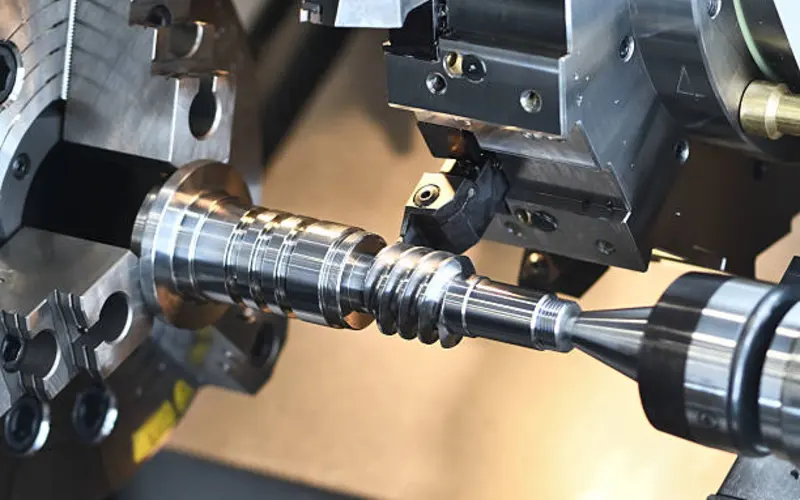
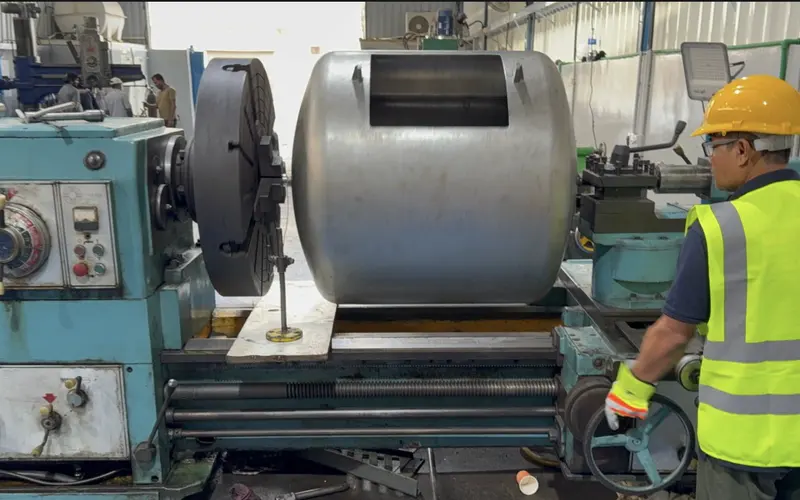
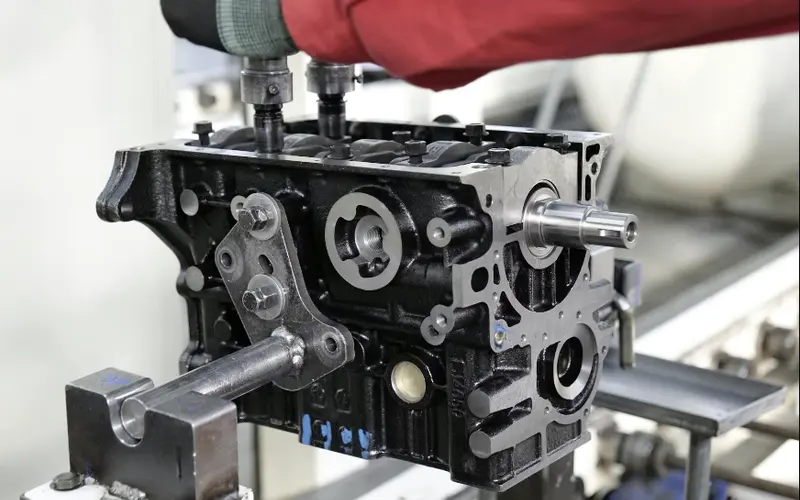
Turning and milling get a part close to size; grinding finishes it. When a component needs very tight tolerances, a precise fit or a smooth surface finish — bearing seats, hydraulic components, die plates and shafts — grinding is usually the final machining step.
Global Prime Engineering offers surface and cylindrical grinding in our workshop in Sharjah Industrial Area 2, both for new parts we manufacture and for repairing customers’ worn components.
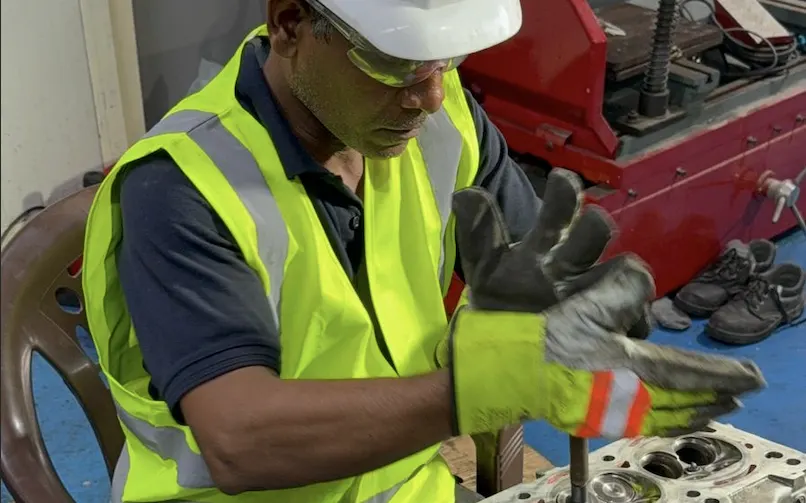
Surface grinding
A surface grinder uses a rotating abrasive wheel to produce flat, parallel surfaces with an excellent finish. Typical surface grinding work includes:
- Die plates, punches and tooling
- Machine slides, gibs and wear plates
- Flanges and sealing faces
- Spacers, shims and precision blocks
- Hardened parts that are too hard to machine with conventional cutting tools
Cylindrical grinding
Cylindrical grinding finishes the outside diameter of a round part while it rotates, achieving a precise diameter, roundness and surface finish. Typical work includes:
- Shafts and bearing seats
- Pins, spindles and rollers
- Hydraulic and pneumatic components
- Pump shafts and sleeves
- Engine components — see our crankshaft grinding guide for crankshaft work
Why grind instead of turning or milling?
- Tighter tolerances on size, flatness and roundness
- A finer surface finish for sealing faces, bearing fits and sliding surfaces
- Hardened materials can be finished after heat treatment
- Economical repairs: worn surfaces can be reground to clean up, then fitted with matching parts
Common grinding repair jobs
Many of the grinding jobs we see are repairs: a scored shaft journal, a warped wear plate, a die that needs its cutting faces reground, or a sealing face that no longer seals. Regrinding is often far cheaper than replacing the part — and much faster when the replacement would have to be imported.
Where a shaft is worn beyond its usable size, it can often be built up by welding and then machined and ground back to its original dimension — see our welding guide.
What to send for a grinding quote
- The part, or clear photos with dimensions
- The required finished size and tolerance, if known
- The material, and whether it has been hardened
- The quantity
Frequently asked questions
What is the difference between surface grinding and cylindrical grinding?
Surface grinding produces flat, parallel faces on a part held on a table. Cylindrical grinding finishes the outside diameter of round parts such as shafts and pins while they rotate.
Can you grind hardened steel?
Yes. Grinding is the standard way to finish hardened parts to size after heat treatment.
Can a worn shaft be reground?
Often, yes. A lightly worn shaft can be reground to clean up and fitted with a matching bush or bearing. A heavily worn shaft can be built up by welding and then machined and ground back to size.
Do you grind dies and tooling?
Yes. Dies and tools making is one of our services, and we regrind die plates, punches and tooling.
Can I bring parts from Dubai or Ajman?
Yes. Our workshop is in Industrial Area 2, Sharjah, a short drive from Dubai and Ajman. Send photos on WhatsApp first and we will confirm whether we can help.